
Fridge Gas Refilling: When It Is Needed and When You Are Being Sold One
Independent multi brand repair service. We are not an authorised service centre for any brand and we are not associated with any manufacturer. Full disclaimer at the end of this page.
A refrigerator is a sealed system. It does not burn off or consume refrigerant the way a car uses fuel, so a fridge that is genuinely low on gas has a leak somewhere. That matters, because a refill without finding and fixing the leak will work for a few weeks or months and then leave you exactly where you started. Here is how to tell whether gas is really the problem, what a proper job looks like, and the signs that it was not done properly.
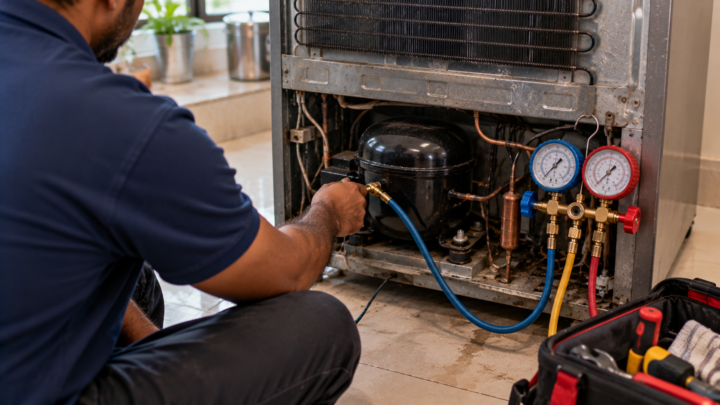
A fridge does not use gas
This is the thing worth understanding before anyone quotes you for a refill. The refrigerant in your fridge moves round a closed loop, changing between liquid and gas as it absorbs heat inside and sheds it at the back. Nothing is consumed. In a sealed system that has not been opened or damaged, the same charge stays in there for the life of the appliance.
So a fridge that is low on gas has lost it through a leak. There is no other route out. The useful question is never "how much to refill it" but "where is it going, and can that be fixed".
Worth knowing: this is the difference between an air conditioner and a refrigerator in people's minds. AC systems have more joints, more vibration and outdoor exposure, so periodic gas work is more routine there. A fridge is a factory sealed unit. Routine gas topping up is not a thing a healthy fridge needs.
Is it actually the gas?
Plenty of faults look like low refrigerant and are not. Before gas comes into it, these get ruled out:
- Dusty condenser coils. A fridge that cannot shed heat cools poorly in exactly the way low gas does.
- A failed defrost system. Ice behind the freezer back wall blocks the cold air path. The freezer may still work while the fridge section stays warm.
- A door seal that is not gripping. Constant warm air ingress, machine runs forever, never gets there.
- A failed start relay. The compressor is not running at all, which looks like no cooling from the outside.
- A dead condenser fan on models that have one.
The pattern that genuinely points at refrigerant is fairly specific: the compressor runs more or less continuously, the freezer manages a thin layer of frost at best, the fridge section stays warm, and the condenser at the back never gets properly hot because there is not enough refrigerant moving through it to carry heat there.
What a proper gas job involves
Four stages, and skipping any of them is how a fridge ends up back in the same state before long.
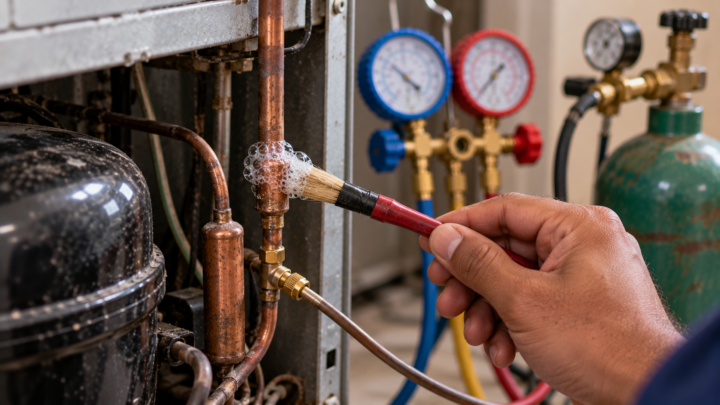
- Find the leak. Pressure testing and leak detection to locate where the refrigerant is escaping. Common sites are the joints, the condenser, and corrosion points on the tubing.
- Repair the leak. Braze the joint or replace the damaged section. This is the actual repair. Everything else is putting the system back together.
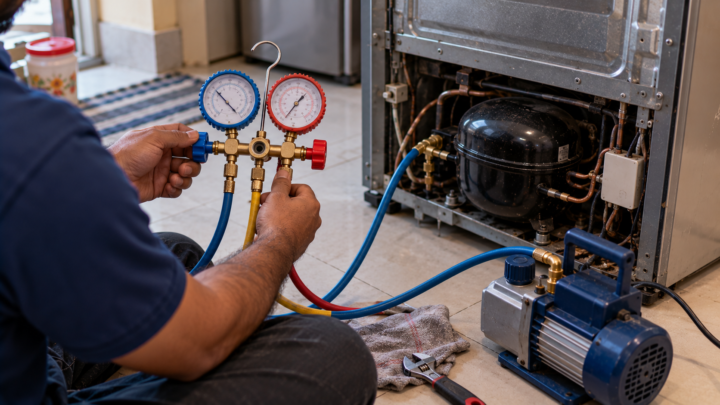
- Vacuum the system. Air and moisture must be pulled out before recharging. Moisture left inside a refrigeration system causes blockages and corrosion later on, and this step is the one most often skipped when a job is rushed.
- Charge by weight. The correct quantity is printed on the rating plate of the fridge. It is measured in, not guessed by watching a gauge. Overcharging is as damaging as undercharging.
Signs the job was not done properly
If you have had gas work done before and the fridge is struggling again, these are the things to look back on.
- It took twenty minutes. Leak detection, repair, vacuum and a measured charge cannot be done that quickly. A twenty minute gas job is a top up.
- Nobody mentioned a leak. If gas was genuinely low and no leak was discussed, the question was never asked.
- No vacuum pump came out of the van. It is a distinctive piece of equipment and it runs for a while. Hard to miss if it was used.
- The cooling returned and then faded over a few months. That is the signature of a refill on an unrepaired leak.
- You were offered an annual gas top up. A fridge needing yearly gas has a leak that nobody has fixed.
Is it worth doing?
Sealed system work is skilled and it is one of the more expensive refrigerator repairs, so it is fair to ask.
On a fridge under roughly eight years old in otherwise good condition, with an accessible leak, it is usually worth repairing properly. On a much older unit, or where the leak is in the evaporator buried inside the cabinet wall, the economics shift and a new fridge often makes better sense. Where the compressor has also failed, that decision is usually clear.
We would rather tell you that on the visit than take money for a repair that does not serve you.
Roughly what it costs
The doorstep visit and full diagnosis is a flat ₹299, set against your final bill if you go ahead. Proper sealed system work sits at the higher end of refrigerator repairs, because it is several hours of skilled work plus the refrigerant itself, and the figure moves a good deal depending on where the leak is and how accessible it is.
You will sometimes be offered a much cheaper price elsewhere for "gas filling". That price is usually for a top up with no leak repair and no vacuum, which is why it is cheaper, and why it does not last.
What a repair costs depends on the fault, the parts used, the brand and the condition of the machine, so we quote only after the technician has seen it, and nothing proceeds without your approval.
When to switch it off
Unplug the fridge and call someone if you notice any of these.
A sharp chemical smell near the unit. Most domestic fridges now use a hydrocarbon refrigerant, and that is flammable.
A hissing sound from the back or underneath when the compressor is off.
Any burning smell, or a compressor too hot to keep your hand on.
The fridge trips your MCB or RCCB.
If you suspect a refrigerant leak, open a window, do not use a naked flame nearby, and leave the appliance switched off until someone has looked at it.
Why leaks happen here
Corrosion. Humid, salty air works on the thin aluminium and copper tubing at the back of a fridge over years, particularly on units kept on a balcony or in a damp corner. This is the most common leak cause we find.
Vibration at the joints. A fridge that is not level, or one standing on an uneven floor, vibrates more than it should and that works on brazed joints over time.
Shifting house. Fridges take knocks when they move, and a hard set down can start a slow leak at a joint that only becomes apparent months later.
Heat load. A system already running at its limit in a hot Kolkata kitchen shows the effects of a small gas loss much sooner than the same fridge would in a cooler room.
Questions people ask us
How often does a fridge need gas refilling?
Never, in normal use. A refrigerator is a sealed system and does not consume refrigerant. If yours is low on gas, it has a leak. Anyone offering a routine annual gas top up is treating the symptom and leaving the cause in place.
How do I know if my fridge really needs gas?
The pattern is fairly specific: the compressor runs almost continuously without reaching temperature, the freezer manages only a thin frost, the fridge section stays warm, and the condenser at the back never gets properly hot. Even then, dusty coils, a defrost failure, a bad door seal or a failed start relay should be ruled out first, because all four look similar from the outside and all four are cheaper to fix.
How much does fridge gas filling cost in Kolkata?
The doorstep visit and full diagnosis is a flat ₹299, set against your final bill if you go ahead. Proper sealed system work, meaning leak detection, leak repair, vacuum and a measured recharge, sits at the higher end of refrigerator repairs and varies with where the leak is. A much cheaper quote elsewhere is usually a top up without leak repair, which is why it does not last. What a repair costs depends on the fault, the parts used, the brand and the condition of the machine, so we quote only after the technician has seen it.
Do you do fridge gas charging across Kolkata?
Yes, on single door, double door, side by side, inverter and non inverter refrigerators from every major brand, as an independent multi brand repair service. We do leak detection and repair before recharging rather than simply topping up. Our workshop is on Nilachal Road in Birati, covering Birati, Dum Dum, Madhyamgram, Sodepur and the surrounding North Kolkata areas. Every repair carries our 30 day repair warranty, and gas work carries its own cover which the technician will confirm.
Want a second opinion before paying for gas?
We test the simpler causes first and look for the leak before recharging anything. A technician visit is a flat ₹299 including full diagnosis.
Independent multi brand repairs Based in Birati, North Kolkata 30 day repair warranty
Important: we are an independent repair service
Roy Home Appliances Service Care is an independent, third party home appliance repair service provider. We are not an authorised service centre for any brand, and we are not associated with, affiliated to, endorsed by or part of the authorised service network of any brand or any other brand or manufacturer.
We are a multi brand repair service. We repair home appliances from all major brands, and we have no commercial tie up with any single one of them. Brand names, model names and product names mentioned on this page are the property of their respective owners and are used here only to identify the appliances we service and to help readers understand their own machine.
If your appliance is still inside the manufacturer's warranty period, we would suggest you contact the brand's own authorised service centre first, since a repair by an independent service provider may affect that warranty.
