
Washing Machine Not Draining? Start With the Pump Filter
Independent multi brand repair service. We are not an authorised service centre for any brand and we are not associated with any manufacturer. Full disclaimer at the end of this page.
Water left standing at the end of a cycle nearly always comes down to one of three things, and they are worth checking in this order: a choked pump filter, a drain hose that is blocked or badly routed, or a drain pump that is jammed or burnt out. The first two are a home job. Here is how to work through them, and when the problem is something else.
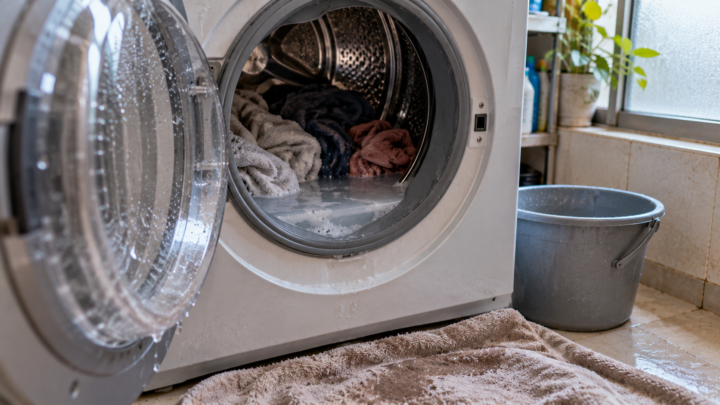
Start with the pump filter
On a front loader there is a small hatch at the bottom of the front panel, usually on the right. Behind it sits the drain pump filter and a short emergency drain tube. This is where almost everything that should not be in a washing machine ends up.
- Switch the machine off at the socket. Not just the power button.
- Lay down an old towel and a flat tray. More water comes out than people expect, usually a few litres if the drum is full.
- Pull out the small drain tube first if your model has one, and let the water run into the tray. Cap it and empty the tray as many times as needed.
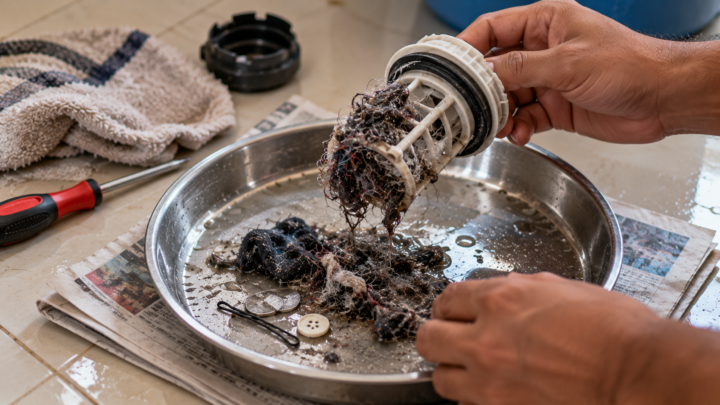
- Unscrew the filter anticlockwise and draw it out. Expect coins, hair clips, lint, buttons and the occasional safety pin.
- Clean it under a tap, clear any debris from inside the housing with a finger, and check the impeller behind it turns freely.
- Screw it back firmly and run a short rinse and spin to test. A filter that is not seated properly will leak.
Top loaders are different. Many do not have an accessible filter at all, and on those the drain pump is reached from underneath or behind. If you have a top loader and the filter is not obvious, do not start removing panels. Move on to the hose check and then call someone.
Then the drain hose
Three things go wrong with drain hoses, and all three are visible from outside the machine.
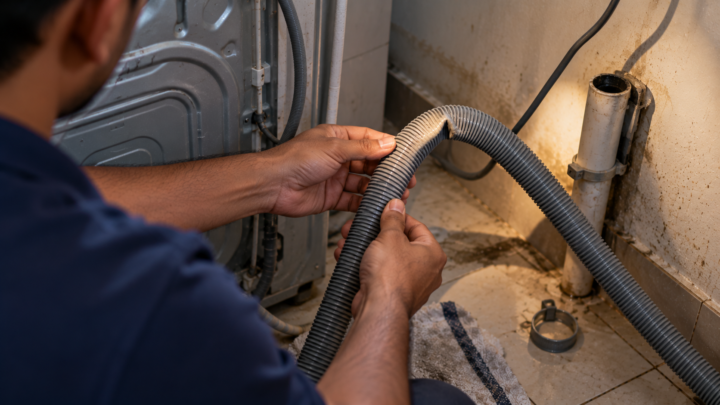
- A kink. Machines get pushed back after cleaning and the hose folds behind them.
- Pushed in too far. If the end of the hose is shoved deep down the standpipe or drain, the machine can siphon and struggle to clear the line. It should sit at the height the manual gives, not jammed to the bottom.
- A blockage inside. Detergent residue and lint build up over years, particularly where the hose sags and holds water. Pull the hose off, take it outside and run water through it. If it does not flow freely, it is blocked.
Also look at the drain point itself. A standpipe or floor drain that is slow or backed up will stop the machine emptying even when the machine is perfectly healthy. Tip a bucket of water down it and see whether it clears.
When it is the pump itself
Filter clean, hose clear, drain flowing, and still water in the drum. Now it is the pump.
There are two versions. A jammed pump usually announces itself: you can hear it trying, a low hum or a buzz with nothing happening. Something has wrapped around the impeller or a hard object is wedged in it. A failed pump is silent, because the motor windings have gone.
Either way the pump has to come out, and on most machines that means tilting or opening the cabinet. It is one of the more affordable part replacements on a washing machine and usually a single visit job.
Less common causes
If the pump runs properly and water still does not clear, two other parts come into the picture. The pressure or water level sensor tells the board how much water is in the drum, and if it reports wrongly the machine may not call for a drain at all. The control board can also fail in a way that stops it driving the pump, though this is uncommon and generally comes with other odd behaviour.
Both need testing rather than guessing, which is what the diagnosis visit is for.
Getting a front loader open with water inside
Front loaders will not unlock while there is water above the door level, which is a safety feature rather than a fault. Do not try to force the door.
The emergency drain tube behind the filter hatch is the way out. Drain the water into a tray a little at a time, and once the level is below the glass the door lock will release normally. If your machine has no drain tube, draining through the filter opening into a shallow tray works, just slowly and with plenty of towels down.
Roughly what it costs
The doorstep visit and full diagnosis is a flat ₹299, set against your final bill if you go ahead. A blocked filter or a misrouted hose is often resolved within that visit with no parts at all. A drain pump is a modest part replacement and among the cheaper washing machine repairs. A pressure sensor or board work sits higher.
What a repair costs depends on the fault, the parts used, the brand and the condition of the machine, so we quote only after the technician has seen it, and nothing proceeds without your approval.
When to stop using it
Switch it off at the socket and call someone if you see any of these.
Water on the floor around or under the machine. Water and a live appliance do not belong together.
A burning smell while it is trying to drain. That is usually a seized pump motor overheating.
The machine trips your MCB or RCCB. Electrical fault, not a drainage fault.
And do not keep restarting a cycle on a machine that will not drain. Each attempt runs the pump against a blockage, and a pump that was merely jammed can end up burnt out.
Why this happens more often in Kolkata
Hard water and detergent residue. Scale and undissolved powder build up inside hoses and the pump housing faster here than in soft water areas. Using more detergent than the load needs makes it worse, not cleaner.
Lint. Cotton heavy laundry in a humid climate sheds a lot of lint, and it collects in the filter.
Drain layouts in older buildings. A lot of flats here have the machine draining into a floor trap or a shared line that is itself partly blocked. The machine gets the blame for a plumbing problem.
Monsoon backflow. During heavy rain, drains back up and water can be pushed back toward the machine. If the problem only appears in the rains, the drain is where to look.
Questions people ask us
How do I drain a washing machine that will not empty?
Switch it off at the socket. Open the small hatch at the bottom front and pull out the emergency drain tube, letting the water run into a shallow tray a little at a time. If there is no drain tube, unscrew the pump filter slowly with towels and a tray underneath. Once the water level drops below the door, a front loader will unlock normally.
Why does my washing machine drain slowly instead of not at all?
Slow draining usually means a partial blockage rather than a dead pump. The common culprits are a partly choked filter, lint and detergent residue narrowing the drain hose, or a drain point that is itself slow. Clearing the filter and flushing the hose fixes most cases. If the machine drains slowly and also struggles to spin, the two are often related, because it will not spin until the water is out.
What does it cost to fix a washing machine that will not drain?
The doorstep visit and full diagnosis is a flat ₹299, set against your final bill if you go ahead with the repair. A blocked filter or hose is often sorted within that visit with no parts needed. A drain pump replacement is a modest cost and among the cheaper washing machine repairs. What a repair costs depends on the fault, the parts used, the brand and the condition of the machine, so we quote only after the technician has seen it, and nothing proceeds without your approval.
Do you repair washing machines across Kolkata?
Yes. We work on top load, front load, semi automatic and fully automatic machines from every major brand, as an independent multi brand repair service. Our workshop is on Nilachal Road in Birati, so we reach Birati, Dum Dum, Madhyamgram, Sodepur and the surrounding North Kolkata areas quickly, usually the same day. Every repair carries our 30 day repair warranty, and replaced parts often carry longer cover depending on the part.
Filter clean and still not draining?
Tell us what you have already checked and we will come straight to the likely cause. A technician visit is a flat ₹299 including full diagnosis.
Independent multi brand repairs Based in Birati, North Kolkata 30 day repair warranty
Important: we are an independent repair service
Roy Home Appliances Service Care is an independent, third party home appliance repair service provider. We are not an authorised service centre for any brand, and we are not associated with, affiliated to, endorsed by or part of the authorised service network of any brand or any other brand or manufacturer.
We are a multi brand repair service. We repair home appliances from all major brands, and we have no commercial tie up with any single one of them. Brand names, model names and product names mentioned on this page are the property of their respective owners and are used here only to identify the appliances we service and to help readers understand their own machine.
If your appliance is still inside the manufacturer's warranty period, we would suggest you contact the brand's own authorised service centre first, since a repair by an independent service provider may affect that warranty.
